Every flight starts with the address.
Northwest Florida includes controlled airport airspace, military operating areas, and restricted areas. I research the location, determine which approvals apply, and build that coordination into the project plan.
Share the location
Address, purpose, and preferred date range.
Review the airspace
Classification, restrictions, altitude, and site conditions.
Coordinate access
LAANC, FAA, or military coordination when applicable.
Confirm the plan
Approved window, weather check, and final flight brief.
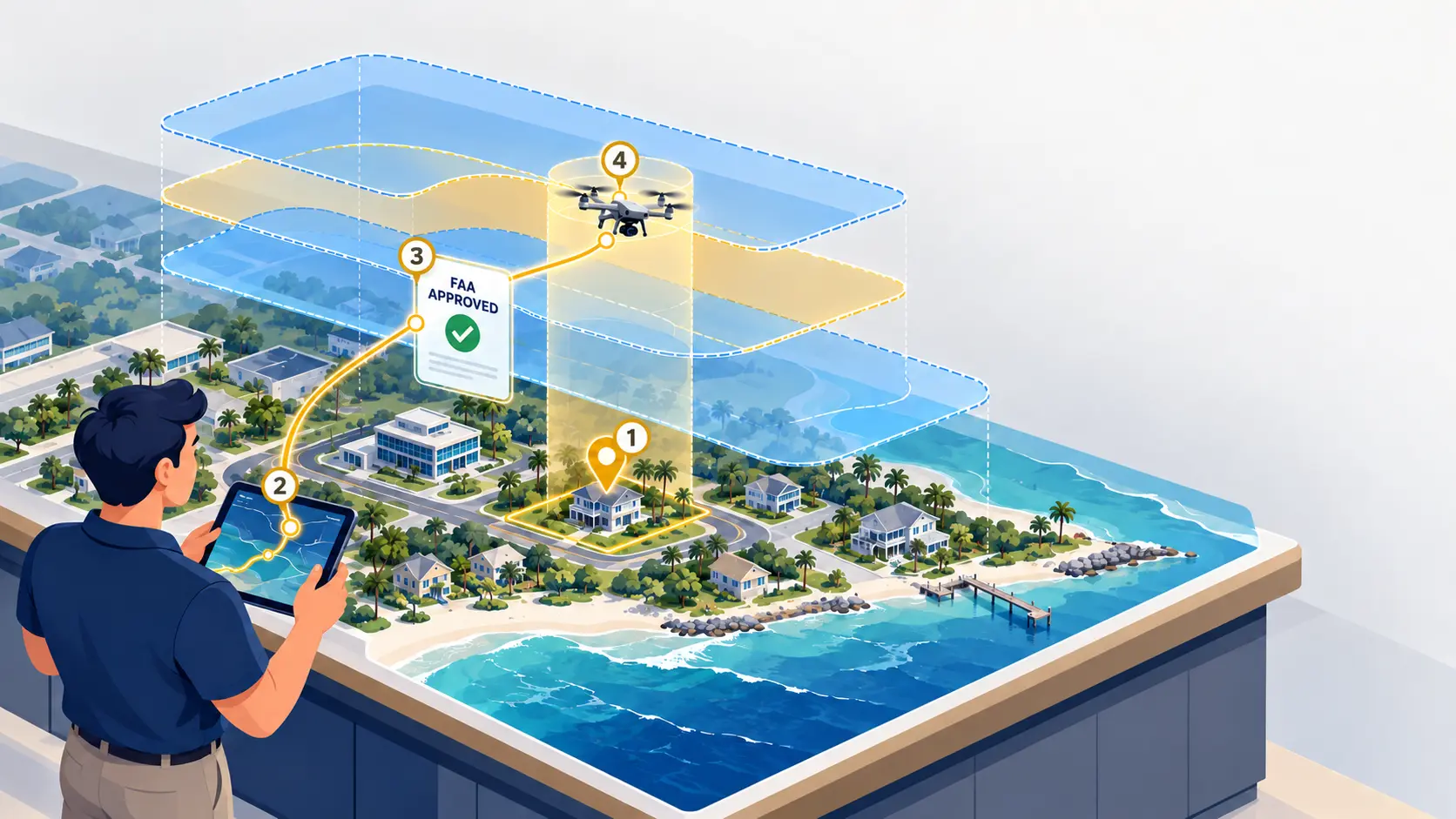
A clear path through complicated airspace.
The exact approval path depends on the property, but every project follows the same practical sequence.
Address and mission review
I define the proposed operating area, requested altitude, purpose, deliverables, and reasonable date window before choosing an authorization path.
Airspace and restriction check
I review controlled airspace, restricted and military areas, published flight restrictions, nearby airports, and location-specific operating limits.
Authorization or coordination
When required, I submit the appropriate request and plan the operation around the limits or conditions in the resulting approval.
Final go/no-go check
Before launch, I recheck weather, temporary restrictions, site conditions, equipment, and the terms of the authorization. Safety and current conditions still govern the flight.
Qualified to operate—and prepared to coordinate.
Commercial drone operations are conducted by an FAA-certificated Part 107 remote pilot. That certificate is the starting point; it does not provide automatic access to every location.
Controlled airspace may require authorization through the FAA’s Low Altitude Authorization and Notification Capability, commonly called LAANC, or through a manual FAA process. Restricted military airspace may require separate permission from the agency responsible for that area. Some locations can involve more than one approval path.
For proposed operations inside applicable Eglin restricted areas, the designated coordination office recommends submitting the request at least seven days in advance. Approval is location-, date-, and mission-specific, so early planning gives the request time to be reviewed.
What I need to begin
- The exact property address or mapped location
- The purpose of the flight and the images you need
- Your preferred date or a practical date range
- Any known access restrictions, people, equipment, or obstacles at the site
Start with the property location.
I’ll determine what airspace planning is needed and incorporate it into the project schedule.